



Drop on demand printing technology is an industrial marking process with a number of advantages. DoD is valued in numerous industries as it enables ink drops to be applied to the desired material in a targeted and consumption-efficient manner. From the pharmaceutical to the food industry - drop on demand printers have become an integral part of modern production processes. By choosing the right DoD printer, you can optimize your production processes and ensure the highest quality.
What is Drop on Demand?
Drop on demand describes a printing process in which ink is only applied to the print medium when it is needed - i.e. "on demand". In contrast to the continuous inkjet process, no continuous ink supply and deflection of the ink jet is used here, but the droplet application is very targeted and horizontal on the material - the advantage is more precise printing results, which is particularly ideal for the repeatable printing of barcodes, QR codes and graphics.
What is special about the drop on demand process?
The drop on demand process offers a number of advantages that make it a particularly efficient and precise printing technology.
Because the DoD process does not require a continuous flow of an ink-solvent mixture, the printing systems require less complex technical peripherals, which makes DoD printing technology less susceptible to faults.
Ink drops are placed in the desired position with a high degree of accuracy, enabling exact print reproduction of text, codes and images.
Because most DoD printers do not use solvents and often work with mineral oil-free inks, DoD printing processes are considered very environmentally friendly and good for health protection while working with the technology.


Advantages of drop on demand printers
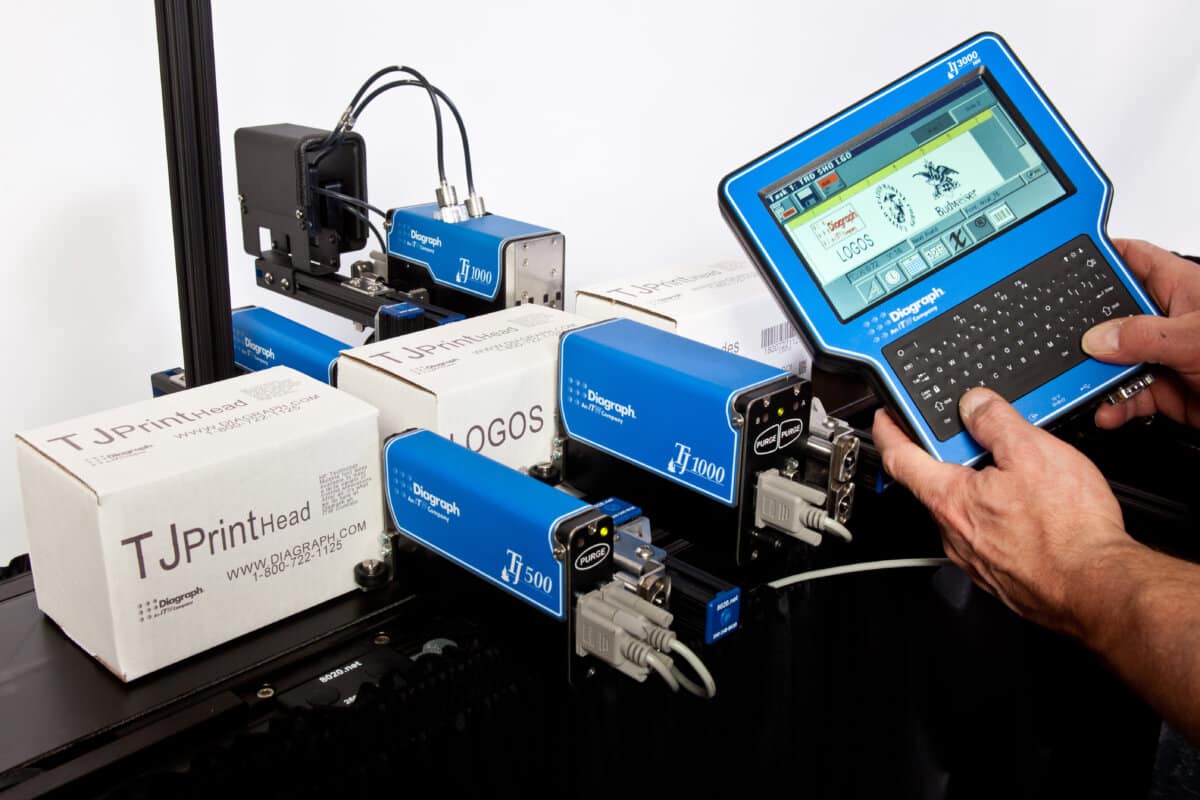
The drop on demand process offers a number of advantages that make it particularly beneficial for industrial companies:
-
High print quality:
Thanks to the precise control of the ink droplets, the Drop on Demand printer produces high-resolution print results.
-
Economic efficiency:
Thanks to the targeted drop application, ink is only used when it is actually needed - and with high-resolution printing. Compared to labels and the additional savings in label material, there is a significant economic advantage to using direct printing with drop-on-demand.
-
Flexibility for small and large print runs:
Whether single items or mass prints - drop on demand printers can be selected according to requirements without compromising on quality.
-
Energy efficiency and sustainability:
As the drop-on-demand process uses less consumables (e.g. compared to labelling), this minimizes the amount of waste. This technology therefore supports the reduction of resource consumption and emissions, which leads to more sustainable labeling.

ARRANGE A CONSULTATION APPOINTMENT ONLINE NOW
Make an appointment here for a free print image consultation
Your contact person:

Possible uses and applications
The flexibility of drop on demand technology makes it a popular choice in various industries:
- Food industry: Enables repeatable, high-quality marking and labeling with precise detail and clear legibility.
- Cosmetics and drugstore articles: Precise application of all product information as well as barcodes and logos for clear identification of the product brand.
- Wood and building materials: Even in harsh environments, DoD technology produces optimum results on sometimes uneven products - even with very large imprints.
The two drop-on-demand processes: Piezoelectric and thermal
There are two basic technologies within the Drop on Demand process, each of which offers its own advantages and specific applications:
Piezoelectric process:
-
Precise and targeted ink dispensing
-
Longevity
-
Processing viscous inks
Thermal process:
-
Precise and targeted ink dispensing
-
Cost-effective
-
Suitable for water- and solvent-based inks


What is the piezo process?
The piezoelectric drop-on-demand process uses electrical impulses to generate ink drops. A piezoelectric ceramic inside the print head changes its shape when energized and pushes the ink precisely through the nozzle. This process is particularly durable and is ideal for use with viscous inks, as the ink is dispensed efficiently without the use of heat.
➔Here you can find our piezo large character printer.
What is the thermal drop on demand process?
The thermal drop on demand process works by partially vaporizing ink through a rapid rise in temperature. The effect of heat leads to the formation of vapor bubbles that force the remaining ink out of the nozzle in the form of a drop within a defined volume. This process is more cost-effective and widely used. It is particularly suitable for water-based inks and is less efficient with thicker inks.
Inkjet printing in product coding has revolutionized the industry and offers companies an efficient solution for various industry requirements. From best-before dates to individual end customer designs on the outer carton - the possible applications are many and varied. The ability to print directly onto the product eliminates the need for consumables and additional steps such as applying a label - saving time and money.
➔Here you can find our thermal inkjet printer.
Frequently asked questions about Drop on Demand
Do you have further questions? You can find more details here.
What is Drop on Demand?
Drop on demand is a printing technology used in industrial companies in which ink drops are only generated and applied to the print medium when they are needed, minimizing the use of consumables.
What drop on demand processes are there?
How does DoD differ from the continuous inkjet process?
What are the advantages of the drop on demand process?
Get in contact with us
We are here for you.

Competent contact persons

Response within 48 hours

Non-binding inquiry
Contact us directly via our contact form or use the contact details below during our business hours.
Tel.: +49 (0)931 25076 0
Tel.: +34 937 376 264
Fax: +49 (0)931 25076 50
E-mail: info@diagraph.de
Business hours
Monday - Thursday: 8:00 - 17:00
Friday: 8:00 - 14:00