



Why is the labeling of hazardous substances important?
The labeling of hazardous substances is extremely important for the safe handling of chemicals. It protects people by preventing accidents caused by mix-ups or incorrect handling and minimizing the risk of health hazards. It also helps prevent environmental pollution and reduces hazardous reactions. It also facilitates transport and storage and optimizes operational processes by providing clear and understandable information.
Labeling requirements for hazardous substances
In order for hazardous substance labels to fulfill their function, they must comply with legal regulations and contain clear, easy-to-understand information. The most important requirements include
- Globally Harmonized System (GHS) & CLP Regulation - Uniform symbols, colors and signal words for globally understandable and standardized labelling of hazardous substances.
- Clear hazard pictograms - diamond-shaped symbols with red borders and black characters that visually identify specific hazards (e.g. corrosive, toxic, flammable).
- Signal words & H-/P-phrases - “Danger” or “Warning” to classify the hazard as well as hazard and safety instructions for correct handling.
- Chemical composition - Exact designation of substances, concentrations and relevant additives for safe use and storage.
Materials and durability of hazardous substance labels
Hazardous substance labels must withstand extreme conditions in order to remain permanently legible and reliable. They must be resistant to external influences and adhere to different surfaces in the long term. The most important properties include
- The labels must not be damaged by aggressive substances such as acids, alkalis, solvents or oils, but must be resistant to chemicals.
- Resistant to mechanical stress, UV radiation, temperature fluctuations and moisture, so that they can be used both indoors and outdoors.
- Strong and chemical-resistant adhesives ensure secure application on challenging surfaces such as metal, plastic, glass or rough surfaces.
Labeling chemicals - Important symbols and information
A hazardous substance label contains key information that enables safe handling. These labeling elements for Chemical labels are required by law and help to identify risks quickly and clearly:
- Signal words (“Danger”/“Caution”) - Indicate the potential danger.
- Hazard pictograms - red diamonds with symbols for quick identification of risks.
- H-phrases & EUH-phrases - Describe specific hazards.
- P-phrases - Safety instructions for handling.
- Product and manufacturer information - name, address, telephone number of the supplier.
- Nominal quantity of the packaging - indication of the quantity contained.
- Substance name & CAS number - For unique identification.
Supplementary information - If necessary, further information.
Complete labeling ensures legally compliant safety during transport, storage and use.
Labeling of hazardous substances Overview - Hazard pictograms
The GHS hazard pictograms are central symbols for labeling hazardous substances. They are diamond-shaped with a red border and contain a black symbol that indicates specific hazards. There are nine different pictograms, which identify flammable, toxic, corrosive or environmentally hazardous substances, among others. These internationally standardized symbols ensure quick and clear identification of hazards and are essential for safety throughout the supply chain - from production to transport and use.

Hazard pictograms with our Allen NGT thermal transfer printer
Our thermal transfer printers only print in one color. As the GHS hazard pictograms require a red border, the labels must be supplied with a pre-printed symbol frame. The printer then adds the required text, hazard warnings and other information in black. This ensures that your hazardous substance labeling meets all legal requirements while remaining legible and durable. Watch our video to see how it works!
Thermal transfer printing system for labeling hazardous substances
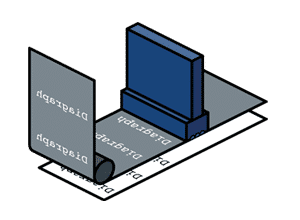
For the precise and reliable labeling of hazardous substances, Diagraph recommends thermal transfer printing. This high-performance printing system has been specially developed for industrial applications and is ideal for printing durable, legally compliant hazardous substance labels.
The TTO (Thermal Transfer Overprint) systems from Diagraph are among the first reliable printers on the market and have proven themselves to this day. Made in Germany, they impress with their outstanding print quality, high durability and ease of use. Thanks to their robust design and precise printing technology, they are ideal for continuous industrial use.
Advantages of the thermal transfer printing system
With Diagraph's thermal transfer printing system, you can ensure that your hazardous substance labeling meets the highest standards - for maximum safety and smooth production.
- High print quality - The high print resolution of up to 600 DPI produces razor-sharp, sharp-edged and high-contrast labels that reliably reproduce even the smallest details. Particularly advantageous for barcodes and pharmaceutical labeling.
- Reliable legibility - The exact print quality minimizes faulty scans and ensures reliable identification of hazardous substances.
- Simple operation & maintenance - Low-maintenance design with short downtimes and reduced personnel requirements for efficient, trouble-free operation.
- Fast printing speed - thermal transfer printers are ready for immediate use and enable rapid label printing without delays.
- Durable printing results - High resistance to heat, cold, moisture, light and abrasion thanks to the optimum combination of ribbon and label material.
Conclusion - Efficient hazardous substance labeling for maximum safety
Anyone using hazardous substances must label them clearly and in accordance with the law. Standardized symbols, signal words and hazard phrases help to prevent accidents and facilitate transport and storage. Durable labels withstand extreme conditions and remain easy to read.
With the thermal transfer printing system from Diagraph, you can print durable and razor-sharp labels. The robust technology minimizes errors, is easy to operate and ensures reliable legibility. This allows you to meet legal requirements, improve operational processes and ensure safe working conditions.