



What is product labeling & why is it important?
Whether product labeling food, product labeling packaging or mandatory information directly on the goods - a clear identification of the product is always provided. The information provided is primarily intended to ensure transparency and thus consumer protection. Take, for example, the issue of perishability and the important indication of the best-before date. Product labeling or mandatory information is also important when quality assurance, traceability and product liability issues need to be addressed. In addition, the marking of the goods helps to facilitate the entire commercial process of delivery and organization. For example, to inform the retailer of the correct price of the delivered goods. In summary: The product labeling obligation in the European Union (EU) ensures the necessary information and protection of the consumer. In economic and legal terms, mandatory self-declaration provides the basis for distribution and traceability.
Labeling products: What are the procedures?
To ensure that a product is clearly labeled up to the point of sale and beyond, important information must be applied directly to the goods or packaging. The labeling industry distinguishes between two main methods: direct and indirect labeling.
Which method is used depends on the type of product and the labeling requirements.
Direct product labeling
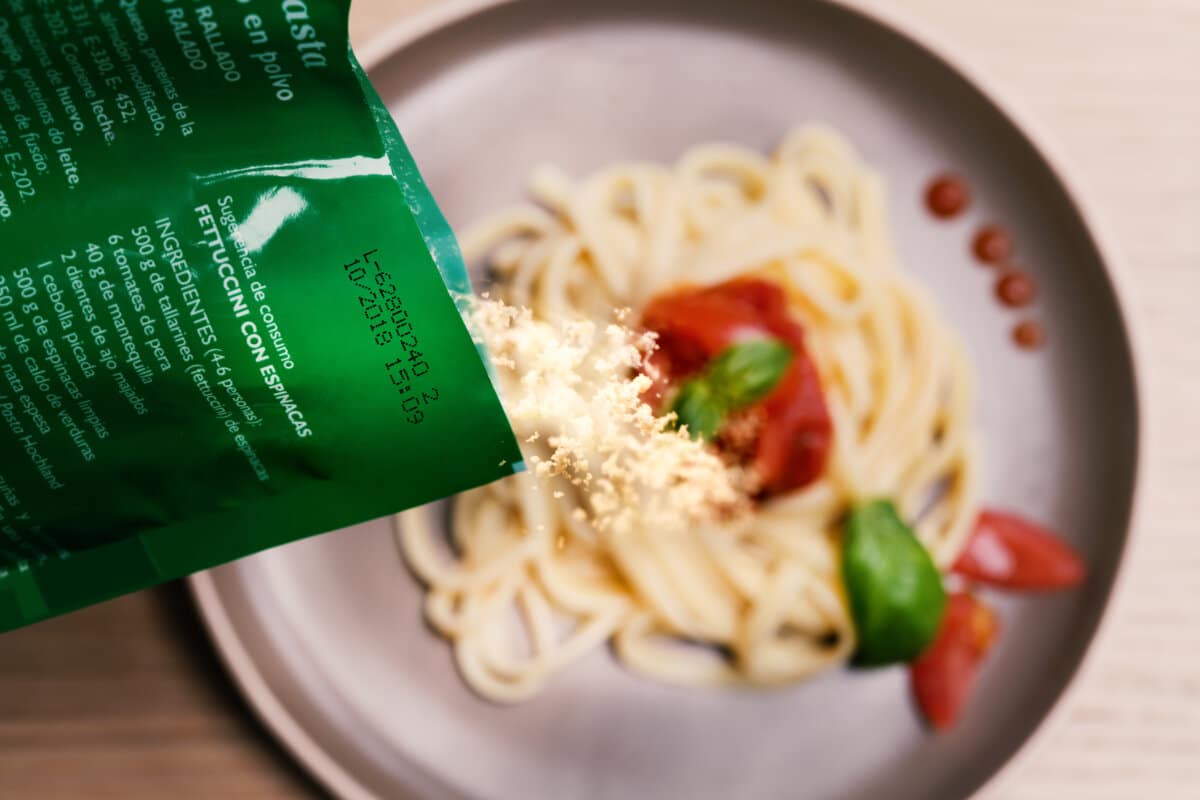
Direct product marking marks products without labels or backing materials, which makes it fast, cost-effective and simple, but also requires precise alignment of the marking machine.
- Cost-effective and fast: No labels required, therefore lower material costs and faster production.
- High precision required: The marking machine must be precisely aligned, small deviations lead to illegible markings.
- Technologies used: Inkjet printers, roller stamps and marking lasers ensure quality and legibility.
- Digital reading technology: Highly developed digital solutions are required for error-free readability.
Indirect product labeling
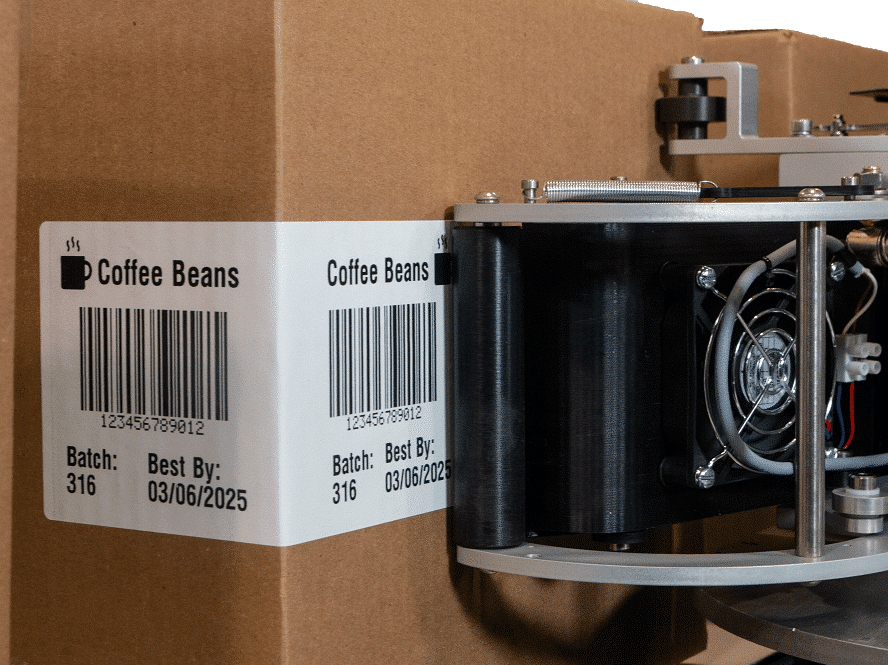
With indirect marking, the information is applied to a label or carrier material, which is then stuck to the product. This method is more flexible and safer, but more expensive.
- More cost-intensive but flexible: Higher costs due to additional materials, but suitable for almost all surfaces.
- High legal compliance: Secure and reliable, especially in regulated industries.
- RFID technology: Labels with RFID chips offer additional theft protection and are used for tracking in logistics.
- Use in logistics: RFID chips enable products to be tracked automatically without visual contact.
Industry-specific requirements
In addition to general labeling obligations, EU product labeling also includes industry-specific requirements. Depending on the industry, mandatory product labeling information for various consumer goods and durables varies in several aspects. Of course, the indication of the minimum shelf life for food is essential in order not to offer perishable goods. A best-before date, on the other hand, naturally has no relevance for new speakers. However, the following applies to all industries: Anyone who distributes physical and/or packaged goods must label their products in accordance with the law. Consequently, EU product labeling does not apply to digital-only offerings. This primarily involves downloads or streaming. If, on the other hand, digital information is located on physical surfaces such as a DVD, then the respective mandatory product labeling information is again valid.
The following industries have a high demand for marking solutions:
- Food industry
- Textile industry
- Pharmaceutical industry
- Consumer electronics
- Equipment, tools, hardware
- Cosmetics industry
- Automotive industry
Because the products are either consumed by the consumer or worn directly on the body, the requirements for the food industry and textile sector are particularly high. Potential buyers must be able to make sense of their choice through the mandatory information on materials used and ingredients contained. In the specific case of a ready-made meal, for example, the product labeling or mandatory information prevents the consumption of possible allergens. With regard to foodstuffs, it should also be mentioned that the inks or stickers used in product labeling must meet hygienic or food law requirements.
Technologies in product labeling
Customers from the food industry, pharmaceutical industry, cosmetics industry, beverage industry and chemical industry (chemical products) as well as from pallet labeling require high-quality printing solutions for professional product labeling. Flexible, fast and intelligent modern coding systems from Diagraph meet the requirements for different production environments. At the same time, the precision and speed of the marking devices enable the effective printing process. The following technologies lay the foundation for product labeling that is as economical as it is qualitative:
| Technology | Application |
| Continuous inkjet | Established and widely used technology for small fonts at the highest speeds and quantities for industrial product marking. |
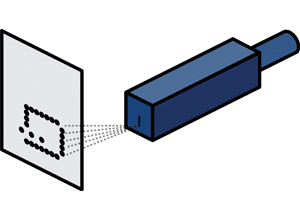
| Large character printer | Large logos, texts and barcodes. Suitable for absorbent packaging such as cardboard boxes or cartons. |
| Thermal inkjet | This printing technology guarantees very high resolutions in a small space. It offers the ideal introduction to product marking. |
| Thermal transfer printer | Changing content on small and large surfaces with a perfect print image. |
| Labeling systems | Precise, robust and economical labeling is achieved by means of an electric drive. |
| Hot stamping machine | Analog and fast coding system for the industry with up to 800 print processes per minute. |
What we offer
The right device for your application






Mandatory and voluntary license plates
Unfortunately, the assumption that a uniform labeling law for all products will facilitate orientation turns out to be false. Rather, the relevant regulations are distributed in different and industry-specific legislations. These regulations govern what must be obligatorily labeled in the respective industry sector.
Basically, a differentiation is made between mandatory and voluntary product labeling. In this context, the question is often asked what the differences are between mandatory product labeling information and voluntary labels? Product information, which is mandatory, must always be provided by manufacturers. In contrast, voluntary labels represent an optional declaration. Consequently, information that goes beyond the legal requirements does not have to be provided on the product or packaging. However, manufacturers are free to use useful or commercially relevant labels to promote sales of their products.
Voluntary labels include, for example, various quality seals, test marks, trademarks or organic labels. However, depending on the respective symbol, different strict or transparent standards/award criteria apply in order to be allowed to carry the respective symbol. On the one hand, there are low-threshold quality seals with very simple requirements and thus limited informative value. On the other hand, voluntary quality marks, which may be applied only after the decision of a competent jury or commission. Well-known voluntary marks and seals represent the GS mark or the Blue Angel. Some voluntary declarations signal qualitative, ethical, environmental or safety benefits from the customer's perspective. The better known and more reputable the voluntary mark or quality seal, the greater the positive impact of the image on the opinion of potential consumers.
Self-declaration and legal standards
The self-declaration includes all legally indispensable product markings. If labeling beyond the legal requirements is provided by the manufacturer, then this is referred to as an optional self-declaration as outlined above. These are therefore "voluntary attachments" which go beyond the general labeling requirement. Voluntary claims thus tend to fall into the realm of advertising, while mandatory product labels implement legal norms and, consequently, legal frameworks. Often voluntary declarations signal advantages - they emphasize the high quality of a product.
Relevant guidelines or legal standards can be found in the following regulations, among others:
- Product Safety Act (ProdSG)
- 9th Ordinance to the ProdSG - CE Machinery Directive
- Food Information Regulation
- Medical Devices Act - CE Directive on Medical Devices
- Cosmetics Regulation
- Textile Labelling Ordinance
- EMC Law - CE Directive on Electromagnetic Compatibility
Which industry do you belong to?
No matter what sector you operate in - we offer you the right marking solution. Our innovative and flexible printing systems ensure precise and reliable markings that meet the specific requirements of your industry. From fast label printing to complex traceability solutions: We support you with customized technologies for every application, ensuring efficient and legally compliant product marking.
We offer you these products
Choosing the right printing system is essential for successful product marking. In addition to expert advice on the optimal printer selection, special materials and accessories are also required depending on the device. Diagraph offers a wide range of products for this purpose: Continuous Inkjet, Large Character Printers, Thermal Inkjet, CO2 Laser Printers, Thermal Transfer Printers, Labeling Systems and Hot Stamping Machines. With these systems, product marking can be implemented precisely and in compliance with the law, adapted to the individual requirements and surfaces of the products.
What must be printed on the labels?
The most important information that must be printed on a product label includes the name or company and the address of the food business operator. This essential data is always used in case of complaints from consumers and/or authorities. For example, prepackaged foods carry the following labeling elements in summary:
- Name and address of the food business operator.
- Material designation: Designation of the foodstuff.
- List of ingredients: This includes the ingredient classes, quantities of ingredients (QUID regulation) as well as the 14 most important substances or products that can trigger allergies or intolerances.
- Net Quantity.
- Best before date (BBD)/consumption date.
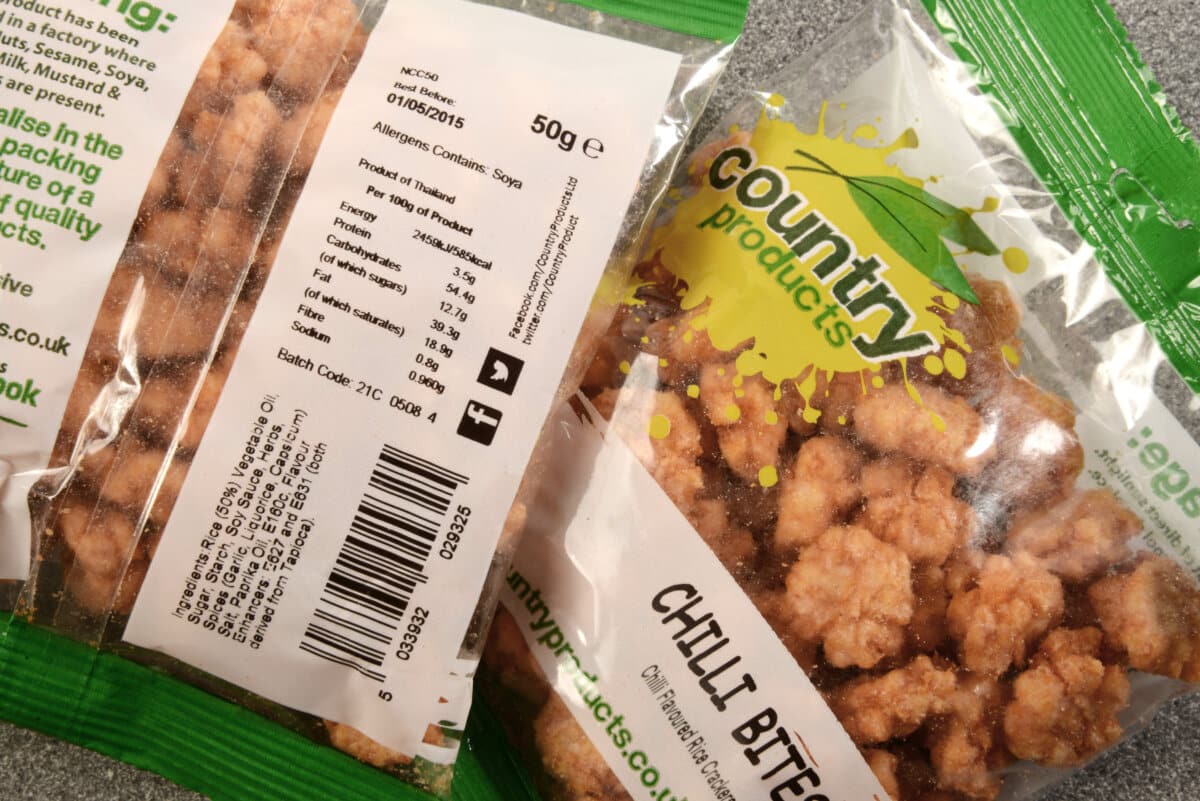
So-called product-related labeling rules must also be observed. For example, the oval identity mark printed on packages of dairy and meat products. It indicates that the company that last handled or packed the goods monitors and complies with EU-wide hygiene standards. Product-related labeling rules also apply to fresh fish. In addition, there is an obligation to indicate the origin of pork, sheep, goat and poultry meat. Thus, in addition to the basic information described, sector-specific information must be implemented within the framework of the EU product labeling.
Product labeling in practice: technological challenges and solutions
Companies need customized product marking solutions that not only meet the specific requirements of the company, but are also adapted to the respective technological conditions.
- Production speed: The printer must be able to handle high speeds without loss of quality so as not to slow down the production flow.
- Flexibility for marking types: Depending on the type of marking, such as serial numbers, barcodes or logos, flexible printing systems are required that meet the specific requirements.
- Environmental influences: Temperature, humidity and dust pollution in the production environment affect performance. Printing systems must therefore be robust and reliable.
- Adaptation to material surface: Smooth, rough or irregular surfaces require different technologies to ensure that the marking adheres well and remains legible.
- Ease of maintenance and reliability: Minimal maintenance times and high reliability are crucial to avoid interruptions in the production process.
The labeling systems should always be technically up to date to ensure efficient and precise labeling.
Possible legal consequences for errors in labeling
If legal requirements are not met, then these deficits quickly show up in business practice as well as in the form of legal consequences.
- The traceability of batches is no longer given.
- There is a threat of organizational problems in storage, delivery, distribution and sales.
- The risk of accidents increases if the improperly labeled product is, for example, flammable or even dangerous for the customer to use.
- Basically, missing information can diminish customer confidence and thus prevent a serious impression.
- Regulatory authorities may initiate fines and regulatory proceedings.
There is always a risk of legal sanctions if mandatory information is missing from the product labeling. In case of detected violations, quite severe penalties can be imposed: If a company or some of its products do not meet the legal requirements of product labeling, then the responsible supervisory authorities are entitled to use high fines and regulatory proceedings as sanctions. The potential penalties are used to enforce compliance. The damage to a company's image when such legal consequences are published by the press should not be underestimated.
Time and again, the competition also takes a close look at whether and how faultlessly other companies implement the EU's product labeling. In the negative case, warnings will be issued against those companies that do not properly implement the self-declaration. This almost always results in a significant competitive disadvantage. In summary, product labeling of packaging as well as product labeling for food should always be done conscientiously and correctly to avoid adverse legal consequences.
Traceability and identification of products through labeling
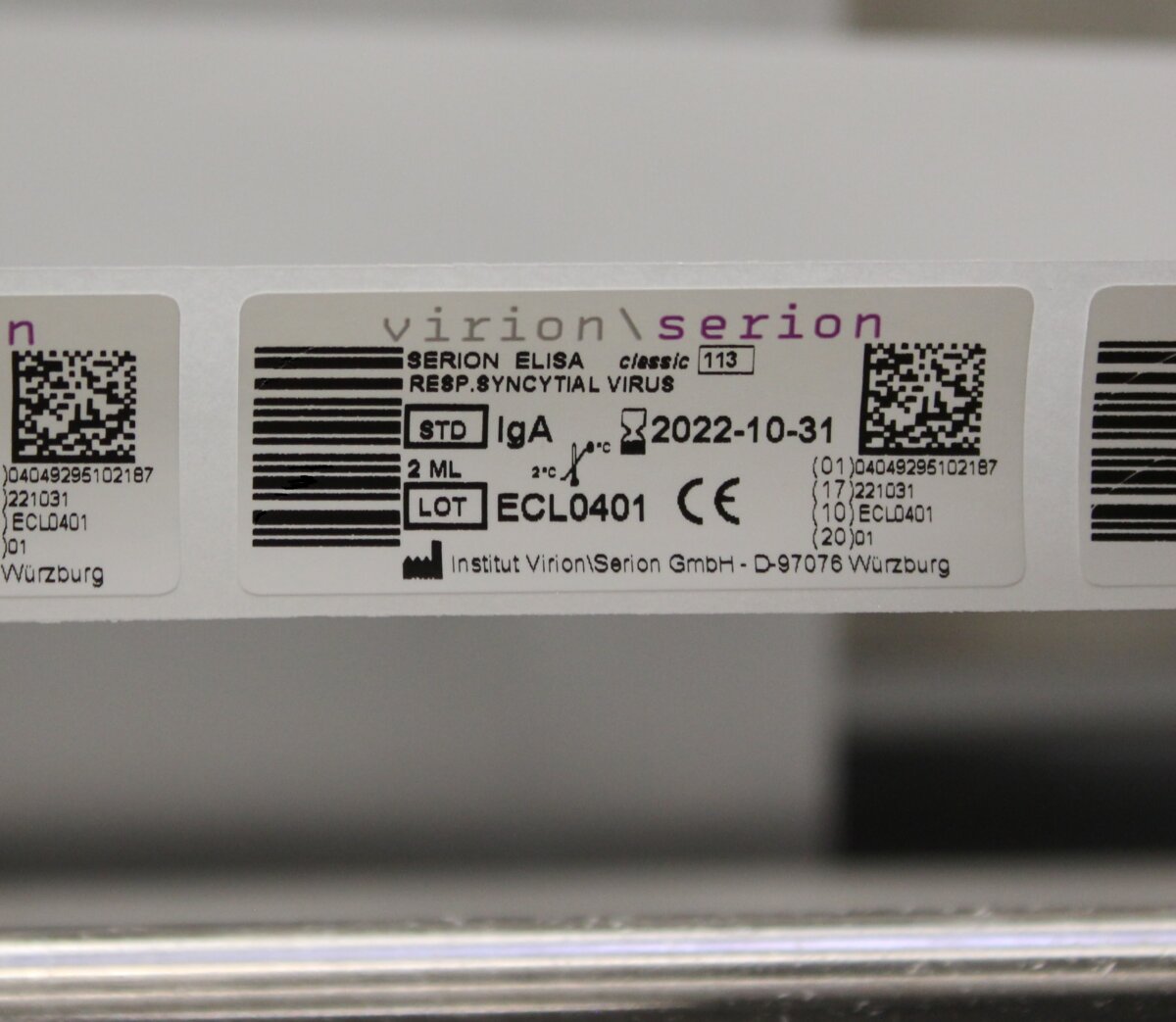
A central function of product labeling in the EU is the traceability of goods. But why is traceability so important and how is it realized in practice? Early marking of products by means of symbols, codes and text provides a unique identifier. Whenever questions arise about the origin and properties of products, the available information can be used to initiate the necessary contact with the dealer or manufacturer. Anonymous goods with unknown hazard or hygiene status are not possible with serious product labeling and complete mandatory information. Thus, one advantage of the product labeling requirement is that the required information makes each product uniquely identifiable.
Conclusion - Marking products
If you want to mark products, you need efficient technologies such as those offered by Diagraph's various coding systems and industrial printers. On the one hand, robust, legible, high-quality and legally compliant product labeling facilitates the purchase decision. At the same time, labeling or printing on packaging and food serves to protect consumers. The main purpose of direct and indirect product labeling is therefore to make it clear what the food or the offered goods are made of and what properties they have. Based on the information, a well-founded and consequently correct purchase decision can be made. Likewise, mandatory product labeling information ensures the traceability of all batches. For manufacturers, the effort required to comply with the law should not be underestimated, because in addition to the general product labeling obligation, industry-specific requirements also apply.
Whether the topic is product labeling of the packaging or product labeling of the food - all manufacturers benefit from solutions that optimize the product labeling process not only in terms of quality, but also in terms of time and cost. For the future, it is clear that only coding systems that are powerful, economically efficient and can be integrated into production lines will ensure long-term competitiveness. Modern technologies and printers from Diagraph provide the basis for this.
Numerous product identifiers exist, such as the batch number, barcodes or QR codes. In addition, the law requires that information such as lists of ingredients, ingredients or best-before dates must be clearly displayed on every container for food or other perishable goods.
FAQ
Do you have further questions? You can find more details here.
What are the product labels?
Numerous product identifiers exist, such as the batch number, barcodes or QR codes. In addition, the law requires that information such as lists of ingredients, ingredients or best-before dates must be clearly displayed on every container for food or other perishable goods.