



How does a QR code work?
A QR code works by arranging small squares in a grid that encode digital information. Special markings in the corners help the scanner to align the code correctly, even if it is rotated or partially covered. Thanks to built-in error correction, damaged or dirty codes can still be read.
When scanning, the software analyzes the position of the squares, interprets the binary data and displays it in a usable form, for example as a link, message or contact details. The structure enables fast and error-free decoding, even under difficult conditions. As a result, QR codes can be used flexibly in many areas, from access to digital content and events to secure payment processes.
The most important facts in brief
-
A QR code is a two-dimensional code that stores digital information such as links, texts or contact details and can be quickly scanned with smartphones.
-
Compared to classic barcodes, it can contain significantly more data and, thanks to error correction, can be read reliably even if damaged.
-
QR codes are used in a variety of ways, e.g. for websites, digital business cards, WLAN access, media content, marketing campaigns or payment processes.
-
A distinction is made between static QR codes (fixed content) and dynamic QR codes, whose target content can be subsequently changed and evaluated.
-
Good legibility requires sufficient contrast, suitable size, clean print quality and a clear quiet zone around the code.
-
Thanks to their ease of use and flexible application options, QR codes effectively connect the offline and online worlds and are an important part of modern communication and labeling.


Advantages of QR codes
QR codes offer numerous advantages that make them one of the most popular 2D codes worldwide:
- Easy to use: QR code scanning works with almost any modern smartphone - usually without an additional app.
- High flexibility: A QR code can contain text, links, contact details or media content.
- Widespread use: QR codes are widely used and generally known in everyday life.
- Design freedom: QR codes can be customized, e.g. as a QR code with a logo or in brand colors.
Dynamic content: With certain variants, target content can be subsequently changed without reprinting the code.
Areas of application for QR codes
Depending on the intended use, QR codes can trigger different content and actions:
- URL: Automatically opens a stored website or landing page in the browser.
- Digital business card (vCard): Creates a new contact in the address book of the smartphone.
- Geolocation: Displays a defined location directly in map applications such as Google Maps.
- Text: Displays a static text, e.g. product information or access codes.
- E-mail: Opens the e-mail program with a predefined recipient address, subject and text.
- WiFi: Automatically connects the end device to a WLAN network.
- App Store: Opens an app directly in the respective App Store for download.
- PDF: Downloads a stored PDF file, e.g. instructions or data sheets.
- Image: Displays a saved image, such as product graphics or information material.
- Audio (MP3): Plays a stored audio file, e.g. explanations or notes.
- Social media: Links to social media profiles or triggers prepared actions.
- Payment functions: Enables digital payment transactions to be triggered, e.g. for wallet or cryptocurrency applications.
Design and structure of a QR code
A QR code consists of several functional elements that enable reliable reading:
- Data modules: Small black and white squares in which the actual information is stored.
- Position marks: Three large squares in the corners ensure quick recognition and correct alignment during scanning.
- Timing pattern: Lines between the position marks help the scanner to determine the grid and the module size.
- Quiet zone: A clear border around the code clearly separates it from the background and improves legibility.
- Error correction: Additional data enables readout even in the event of partial damage or design adjustments.
The size of the QR code depends on the amount of data and the selected error correction level.

Scan and read QR code
QR codes are usually scanned with the camera of a smartphone or with special handheld and industrial scanners. Modern mobile devices usually recognize QR codes automatically without the need for an additional app. Once the code has been scanned, the stored content is immediately interpreted and displayed, for example as a website, text, contact information or download.
Several factors are crucial for reliable QR code reading: sufficient contrast between the code and the background, clean and sharp print quality and a correctly executed quiet zone around the code. The size of the QR code and the lighting during scanning also influence reading reliability.
Create QR code - how it works
Special software or an online generator is used to create a QR code. The desired content such as text, URLs, contact details or media is entered and automatically converted into a QR code. Depending on the intended use, the QR code can be designed in different ways.
For example, a QR code can be:
- as a QR code with a link to a website,
- graphically adapt as an image as a QR code,
- or as a QR code with logo to strengthen the brand impact.
Before productive use, it is advisable to test the QR code on different end devices and with different scanner apps to ensure reliable function in later use.
Typical errors when creating QR codes
Despite their ease of use, various problems can occur when using QR codes that impair their readability and function. You should therefore avoid these errors when using QR codes:
- Too little contrast between code and background
- Module size too small
- Missing or too small quiet zone
- Overloaded designs for QR codes with logo
- Invalid or incorrect target links
Professional printing and inspection systems help to avoid these errors at an early stage.
Dynamic QR code
A dynamic QR code is a QR code whose target content can be subsequently changed without the code itself having to be recreated or reprinted. Instead of storing the actual information directly in the code, the QR code refers to a central forwarding address via which the content is controlled.
Dynamic QR codes are often used in marketing campaigns, on product packaging, in print media, on posters or for time-limited promotions where content needs to be updated regularly.
How does a dynamic QR code work?
When a dynamic QR code is scanned, a stored URL is first called up, which serves as the central forwarding address. This automatically redirects the user to the currently defined destination, such as a website, a document or a marketing campaign. The stored target content can be changed or updated at any time without having to recreate or print the QR code itself.
Advantages of dynamic QR codes
Compared to static QR codes, dynamic QR codes offer extended possibilities for the flexible and long-term use of digital content.
- Content can be changed at a later date without reprinting the QR code
- High flexibility for marketing and product campaigns
- Measurability through evaluation of scan statistics
- Central management of multiple QR codes
- Correction of errors with incorrect or outdated target links
- Long-term usability, even with changing content
Print QR code labels on products - printing solutions from Diagraph
For the professional printing of QR code labels on products Diagraph offers various marking systems that are suitable depending on the material, surface and production environment:
- Thermal transfer printer
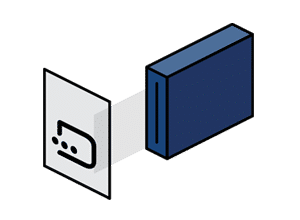
Ideal for high-resolution printing of QR codes, texts and barcodes on labels and films. Suitable for variable data and precise marking with high print quality. - Large character printer
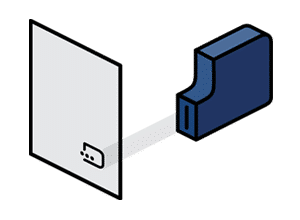
Suitable for large-format QR codes and markings on cardboard, paper or wood. Ideal for packaging and highly visible codes in industrial production. - Thermal Inkjet (TIJ)
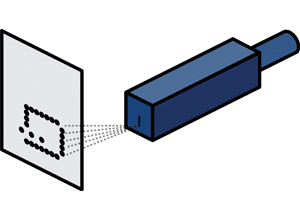
Suitable for high-resolution printing of QR codes on paper, cardboard and absorbent packaging. Ideal for clear, high-contrast codes at low to medium line speeds. - Continuous Inkjet (CIJ)
Ideal for printing QR codes on bottles, cans, cables and other non-absorbent or uneven surfaces. Particularly suitable for high production speeds. - CO₂ laser marker
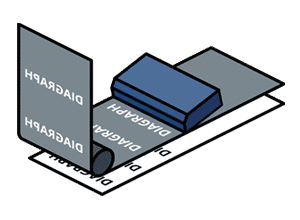
Perfect for permanent QR code markings without consumables. Suitable for materials such as cardboard, plastic, glass or coated surfaces. - Print and Apply Labeler
Ideal when QR codes need to be flexibly printed on labels and automatically applied to products or packaging. Suitable for variable data, serial numbers and traceability.
All Diagraph systems guarantee high print quality, sufficient contrast and reliable readability of QR codes - even under demanding industrial conditions.
Conclusion: Why QR codes are indispensable
The QR code is a versatile and user-friendly solution for fast and reliable information transfer.
Whether on products, posters, flyers or as an alternative to the classic business card. Hardly any other medium connects the offline and online worlds so directly and efficiently. Thanks to its high level of acceptance, flexible application options and simple integration into existing processes, the QR code is now a central component of modern labeling, marketing and communication solutions.
With the right design, print quality and technical implementation, it offers long-term added value for companies and users alike.
FAQ
Do you have further questions? You can find more details here.
What exactly is a QR code?
A QR code (Quick Response Code) is a two-dimensional code that stores information such as links, texts, contact details or media. It can be read with smartphones or scanners and enables quick access to digital content. QR codes are used in marketing, on packaging, in industry and on business cards, among other things.