



EAN code simply explained
Simply put, an EAN code is the series of numbers under a barcode. The code ensures that products can be clearly identified worldwide. The identification is standardized so that each EAN code is only assigned once. This makes it easy to manage items in the warehouse, sell them in stores or track them in the system. The sequence of numbers is usually represented as a barcode that is scanned with a reader. This creates automated processes that save time and avoid errors - real added value for any industry.
EAN code decoding: how to read the number combination correctly
A classic EAN code - usually with 13 digits - consists of clearly defined areas. This structure makes it internationally usable and machine-readable:
- Country code (digits 1 to 3): GS1 country prefix (400 to 440 stands for Germany)
- Manufacturer code (digits 4 to 7): Company number assigned by the GS1 register
- Article number (numbers 8 to 12): Item number assigned by the company for the specific product
- Check digit (digit 13): For error detection during scanning
This structure enables systems to reliably identify products - regardless of where they are produced or sold.
What is an EAN number?
The terms "EAN code" and "EAN number" are often used interchangeably. Strictly speaking, however, the EAN number refers exclusively to the sequence of digits itself - i.e. without the associated graphic barcode. This number consists of either 8 or 13 digits and is assigned worldwide by the GS1 organization. It ensures that each product can be uniquely identified and that there is no duplicate or incorrect labeling.
The use of an EAN number has numerous advantages for companies: it enables improved product traceability, ensures professional product labeling and helps to reliably meet the requirements of retailers.
Difference between EAN, barcode and GTIN
GTIN (Global Trade Item Number)
- International standard number for the unique identification of products
- Generic term for various number formats:
- GTIN-12 (e.g. UPC in the USA)
- GTIN-13 (e.g. EAN in Europe)
- GTIN-8 (for very small products)
- GTIN-14 (for packaging units or containers)
- Used worldwide in trade, logistics and production
- From the organization GS1 awarded
EAN (European Article Number)
- 13-digit product number
- Applies as GTIN-13
- Originally European standard, now used worldwide
- Used as EAN-13 barcode on products
- Particularly common in European trade
UPC (Universal Product Code)
- 12-digit product number
- Applies as GTIN-12
- Mainly in use in the USA and Canada
- Used as UPC-A barcode on products
- Scannable worldwide and fully compatible with GTIN system
Barcode
- Graphical representation of a GTIN (e.g. EAN or UPC)
- Consists of black and white lines and a sequence of numbers
- Enables the automated scanning of product information
- Various barcode types: e.g. EAN-13, UPC-A, DataMatrix, QR code
- Enables fast and error-free data capture
In concrete terms, this means that the EAN and UPC are special forms of the GTIN, and the barcode is the visual representation of this number that can be scanned. All terms are closely linked, but each denote different levels of the product identification system.
Areas of application of the EAN code in the industry
The EAN code is used wherever products are labeled, stored or sold. It is particularly important in industries with high traceability and automation requirements.
Typical areas of application:
- In the food industry, the EAN code ensures safe and fast product labeling.
- The beverage industry uses it to identify bottles, cans and containers.
- In the cosmetics industry, cosmetic and drugstore products are quickly recorded and tracked using standardized codes.
- In the chemical industry, unique codes ensure the safe identification of containers.
- The pharmaceutical industry uses the EAN code for batch tracking and legal requirements.
- The code helps to track and control load units through pallet identification.
- Warehouse automation uses the EAN code to control the flow of goods and robots.
The EAN code supports automated warehouse management, precise tracking and fast order picking - from production to retail.
EAN code and barcode printing - Industrial printing solutions
Various printing technologies are used for the reliable and permanent marking of EAN numbers in industry, which differ depending on the requirements and material.
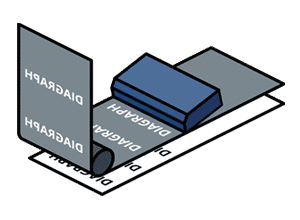
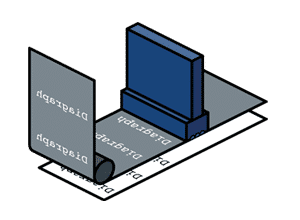
Thermal transfer printing has proved particularly thermal transfer printingas it produces precise and durable printed images on labels or flexible packaging. This technology transfers the EAN code with high resolution and resistance to heat, chemicals and abrasion.
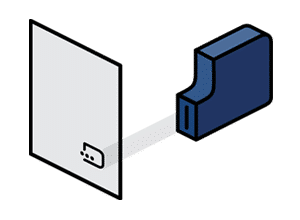
For applications where permanent, non-contact marking directly on surfaces such as metal, plastic or cardboard is required, the laser marking on. It generates sharp, forgery-proof number sequences without consumables and is particularly low-maintenance.
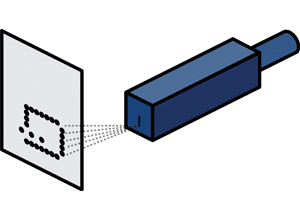
Thermal inkjet printer (TIJ) provide a compact and flexible solution for high-resolution printing of EAN numbers on a wide range of materials, from cardboard to film. They enable fast and cost-efficient labeling with easy maintenance.
For large-format prints, for example on cardboard, the ResMark 5000 large character printer. It can print EAN numbers in large digit heights without contact and is ideal for production lines with high throughput.
Depending on the area of application and material, the choice of the right industrial printer is crucial for marking the EAN number on products or packaging in a legible and error-free manner.
How do I get my own EAN number? - GS1 registration and requirements
If you want to sell products professionally, you need your own EAN numbers. In Germany, GS1 Germany GmbH assigns these numbers. This is how the process works:
- Registration with GS1 Germany: Companies register with GS1 and enter their company data.
- Receiving your own manufacturer code: GS1 assigns a unique manufacturer code, which is part of every EAN number.
- Selection of the number block: Depending on requirements, a block with 10, 1,000, 10,000 or 100,000 codes can be requested.
- Independent assignment of article numbers: Companies can assign their own article numbers within their block and thus label products individually.
- Payment of the annual license fees: The fees are based on the size of the number block and the company's turnover.
Products may not be listed or sold on the market without a valid EAN. Registration with GS1 is therefore an important prerequisite for professional distribution.
FAQ
Do you have further questions? You can find more details here.
What does the EAN code say?
The EAN code is a unique product number that provides information about the manufacturer and item. It ensures that products can be clearly identified worldwide, recorded in retail and traced - important for logistics, sales and inventory management.